
A brand voice is the consistent way a company sounds in writing, from a label to an error message. A useful voice guide is short, full of real examples, and specific about what the brand would never say.
What is a brand voice?
Voice is the character of the brand in words. Tone shifts with the moment, the way a person sounds different at a funeral and at a party. Voice stays put.
It matters because most of a brand is read. Menus, packaging, checkout screens and emails are all writing, and customers notice when they sound like different companies.
What belongs in a voice guide?
Less than most guides contain. I'd keep a one-paragraph description of the character, a set of before and after rewrites, and a short list of words the brand avoids.
Adjectives such as 'friendly' and 'bold' are the weakest part, because every brand claims them.
What does a working voice look like?
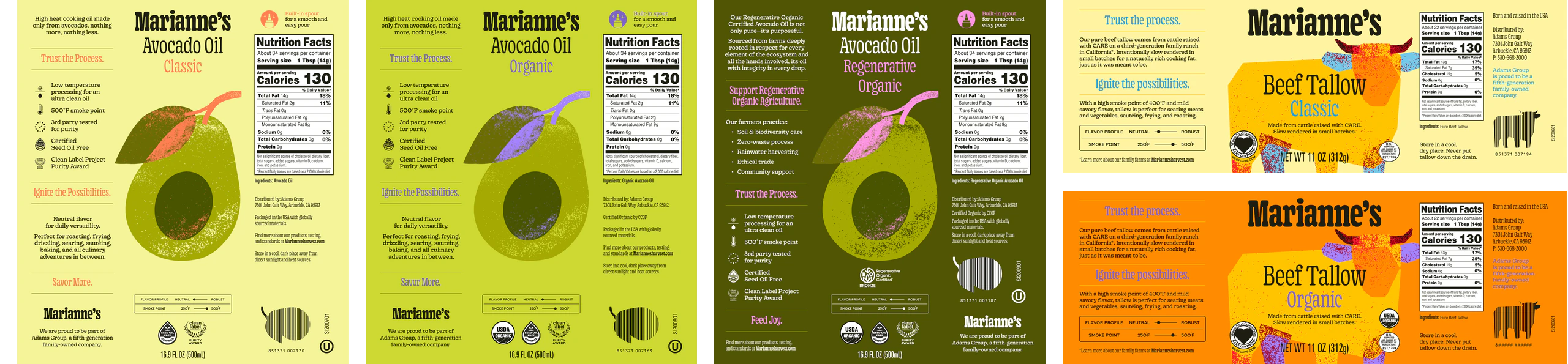
On the labels for Marianne's Harvest, a range of avocado oils and tallows, each label carries one word for what the ingredient does in the pan: crunchy, crispy, tender or glossy. One word per label is a rule a designer can apply without asking anyone.
At Native Roots the campaign line was 'You, but Better.' It ran across print, outdoor and radio. Garden Variety's merchandise said 'Our grass is always greener.' Short lines like these do more to hold a voice together than a page of adjectives.


How do you keep it consistent?
Give writers and designers the same examples, and review real work against them. A voice survives when the people making the brand can hear it.
Short answers
What is the difference between brand voice and tone?
Voice is the brand's consistent character in words. Tone is how that character adjusts to a situation, such as a welcome email compared with a billing error.
How long should a brand voice guide be?
Short enough to read in ten minutes. A page or two of description and a larger set of examples will get more use than a forty-page document.