

An origin story explains why something exists. For a brand it gives customers a reason to believe the rest, and it gives designers a brief: every later decision can be checked against how the thing began.
What is an origin story?
The French call it a pourquoi story, a 'why' story. Folk tales of this kind explain how something came to be. They last because the explanation is useful, and each generation retells it in its own way.
Why does a brand need one?
Because people ask. Who made this, and why should I trust them? A company that can answer in two sentences has a head start on one that answers with a list of features.
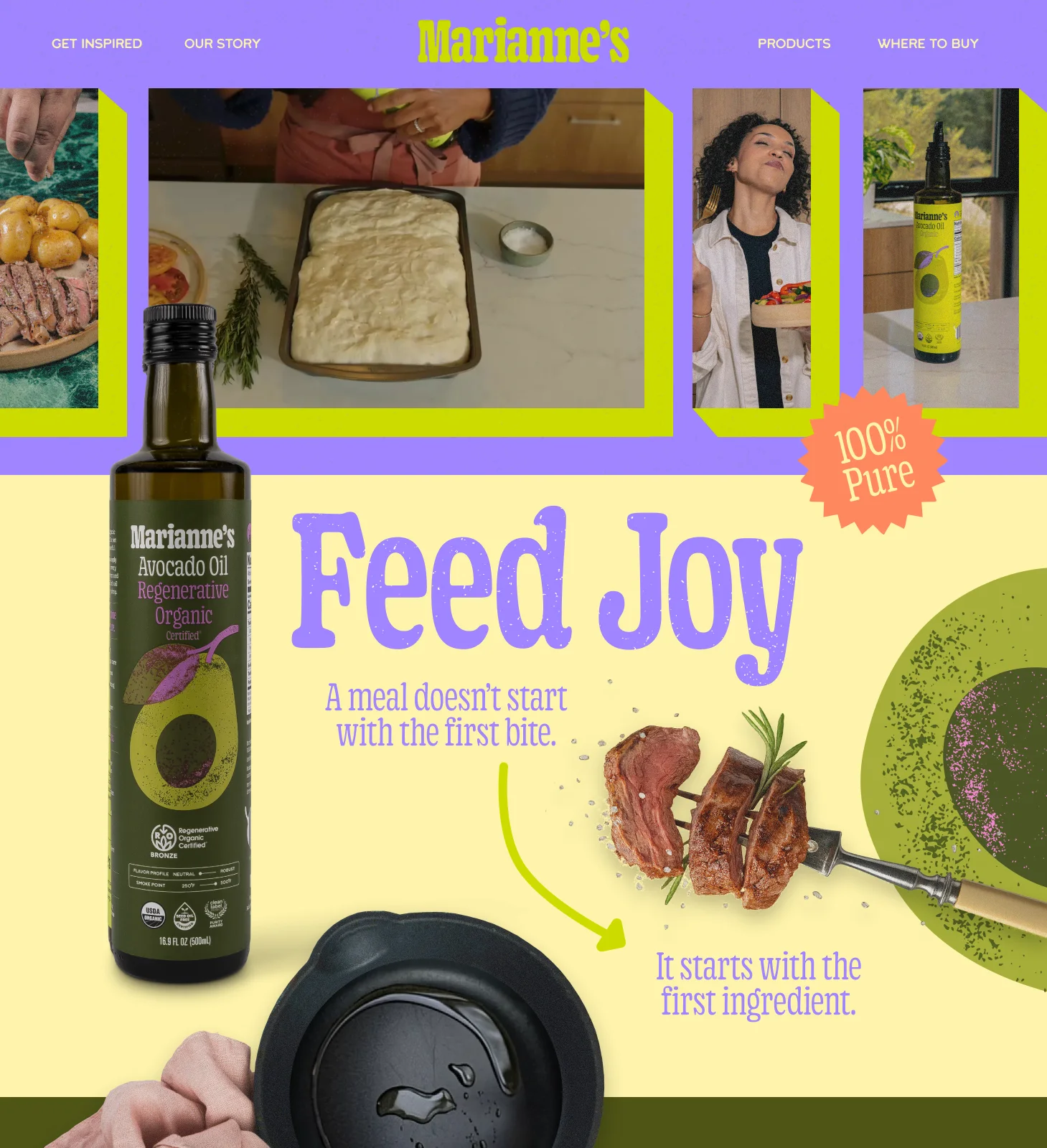
Marianne's Harvest is a recent example from my own work. The homepage opens on stills from the kitchen shoot, then the line Feed Joy, then the first ingredient, then the family legacy. The origin sits where a shopper is deciding whether to care.
How does design shape the story?
Story (by) Design argues that a story succeeds on two things: what it says, and how the telling is designed. The same origin can be a paragraph, a label or a thirty-second film. Choosing the form is design work.
One exercise from the book is to tell the story in six words or less. It is harder than it sounds, and it shows quickly whether there is a story there.
Short answers
How long should a brand origin story be?
Short. Two or three sentences on the site, with a longer version available for anyone who wants it.
What if the origin isn't dramatic?
Most aren't. A plain account of the problem the founder kept running into is enough, as long as it's true.